USGTF INDUSTRY PARTNER – SWING PROFILE

50%-off Swing Profile Golf Analyzer Coach Subscription in July 2024

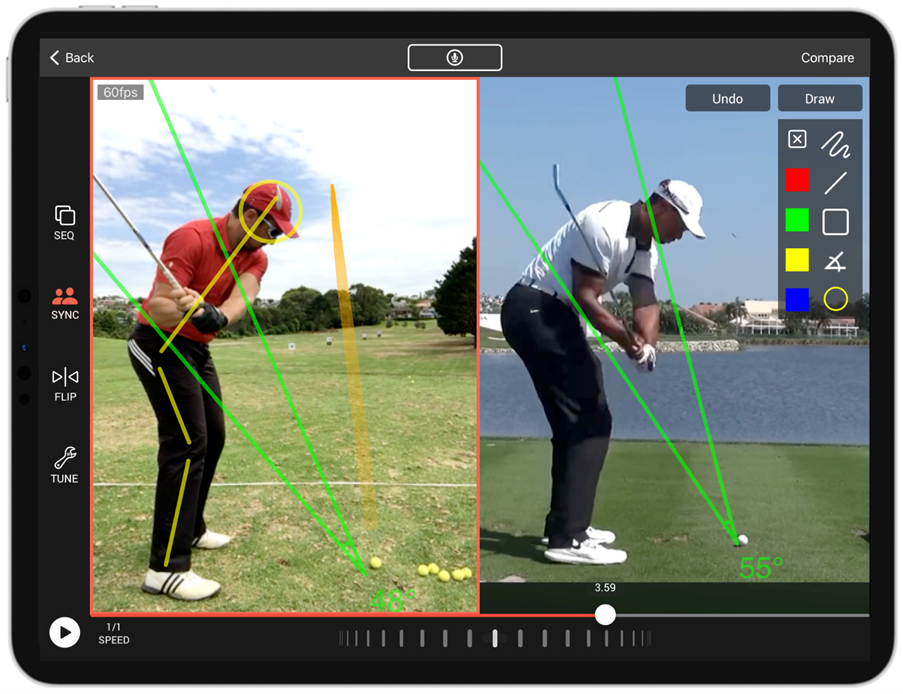
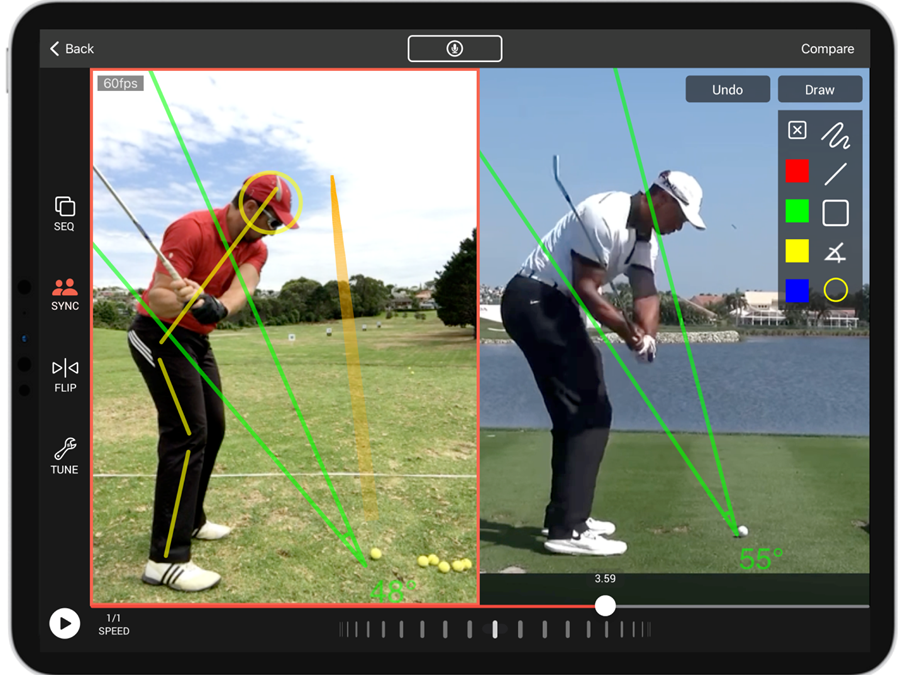
Golf coaching is easy and fun with Swing Profile golf analyzer! Now for the month of July 2024, we are offering 50% off Swing Profile “Coach” version, as well as 50% off our golf putt training app “Putt Profile” (www.puttprofile.com). Download the apps and try now! For more information, please contact info@swingprofile.com.

Features of Swing Profile golf app for coaches include:

•  PGA Show award-winning “Auto Capture” technology for golf analysis and student self-training.

• “Ball tracker” for instant ball trajectories tracking

• Easy “voiceover” for recording your voice and drawing Automatic video backup to secure cloud storage and video synchronization across devices

• Easy video exchange with students on both Swing Profile app and email

• “Student Lockers” system for organizing student videos

• Enlist your coaching business on our “Coach directory” to be seen by hundreds of thousands of Swing Profile users

EDITORIAL – WGTF TOP 50: AWARD AND VALUE

In any field of endeavor, there are those who separate themselves from the rest. The WGTF Top 50 was inaugurated years ago to recognize those who have achieved and maintained a standard that is among the highest in the golf teaching industry. Those who are on the list can truly be proud of this accomplishment.

There might be a misconception that those who did not make the list are not as “good” at teaching as those on the list. This is certainly far from the case. In selecting the overall Top 50, other factors are taken into consideration, such as years of service to the golf industry, published items, peer recognition and growing the game initiatives, for example. In other words, those who are on the list are there because they possess a list of attributes that goes far beyond just teaching ability alone.

The list also recognizes the global structure of the golf teaching industry, as there are fine teachers and coaches in all corners of the Earth. There are a variety of teaching styles represented — which is important — as no one teaching style fits all students.

The list is updated every two years, and look for the 2024-25 list to be featured soon.

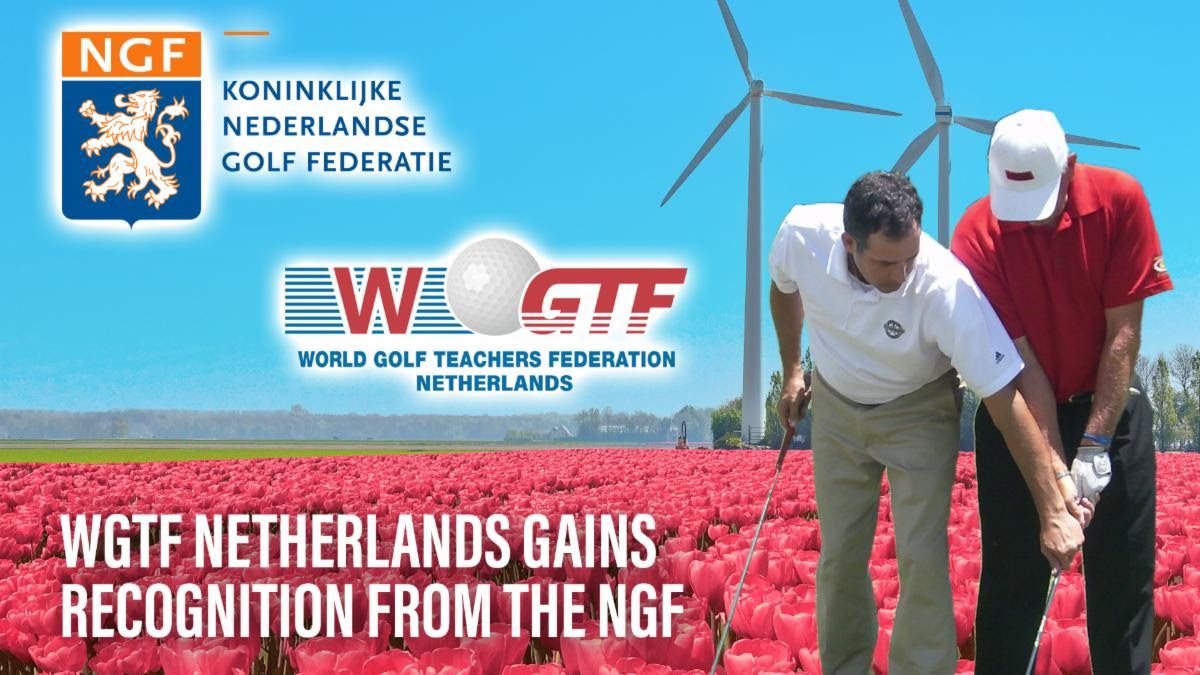
USGTF/WGTF ACHIEVES ANOTHER MILESTONE: WGTF-NETHERLANDS RECOGNIZED BY NGF

 
In an email to WGTF-Netherlands president Bjorn Beekman, the Netherlands Golf Federation (NGF) has officially recognized WGTF-Netherlands to be on equal footing with the PGA of Holland as an association of golf professionals. This means all WGTF-Netherlands Level 3 and Level 4 professionals can now compete in NGF professional events, as previously this was only reserved for members the PGA of Holland.

This matters a great deal, according to Beekman. “It is indicative of the continued growth and improvement of WGTF Netherlands and the entire WGTF,” he stated. “It is a sign that golf governing bodies worldwide are beginning to respect the strength and legitimacy of the WGTF.”

Beekman went on to say, “I think customers always have to have a choice. When you like fast food, you can choose McDonald’s, KFC, Burger King, etc. I think it’s good to see the difference between both education organizations, We as the WGTF are more for the adults with life experience and a life before golf, so we help them in a career change. Everybody is welcome to join the WGTF who has a passion for golf.”  

US CUP REGISTRATION ONGOING

Registration for the 28th annual United States Golf Teachers Cup at Painted Desert Golf Course in Las Vegas, Nevada, is available at https://www.usgtf.com/uscup. The national championship event of the USGTF features play in three divisions: Open, Senior (50+) and Super Senior (68+). The U.S. Cup has many regular players who return every year to renew old friendships, make new ones, and to compete for national honors. If you have yet to experience a U.S. Cup, please do yourself a favor and consider joining us this year!

NEWS FROM TRINIDAD AND TOBAGO

By Anthony Benny

At present, I am working with mostly junior golfers. It is a joy and a pleasure to work with them and listen to their feedback on the lesson. There are two very outstanding youngsters, Isabella Ramdeen and Harper Lane, whom I teach at St. Andrews Golf Club, Moka, and Pointe-a-Pierre Golf Club Ltd. The number of junior golfers has declined to less than half of what it was six months ago.

I am also working with the national junior team, in which 12-year-old Isabella is a member. I have a strong belief that this young lady will go places. Her love and commitment to the game is unbelievable! Meanwhile, Harper reminds me of the movie “The Greatest Game Ever Played.” His parents came to me at golf class one day and said, “Coach, we are having a problem sleeping at night. Harper hits balls at very odd times at night. He loves the game!” He is only 8 years old.

Before I end, I would like to say greetings from the beautiful twin islands of the Republic of Trinidad & Tobago to all my USGFT friends – Jennifer, Bob, Mark, and Geoff, and not forgetting my old friend Bob Jaffe. I stand as a proud USGTF Certified Golf Teaching Professional.

REGION UPDATE

  Northeast – The USGTF Northeast Region Championship will be held Thursday, June 20, at Mountain View Golf Course in Ewing, New Jersey. Tee times will begin at 12 noon. The entry fee is $185. For more information and to enter, please contact region director Bob Corbo at simductivegolf@gmail.com.

Central – The USGTF Central Region Championship will be played in July at Walden Ponds Golf Course in Hamilton, Ohio, a suburb of Cincinnati, July 21-22. The entry fee is $250. For more information and to enter, please contact region director Tony McMullin at tmcmullin72@yahoo.com.

Why Sport Selection Matters in Betting Strategy, According to Betzonic

Betting strategy is rarely discussed with the nuance it deserves. Most conversations focus on odds comparison, bankroll management, or the merits of value betting — all legitimate concerns. But one foundational decision tends to get overlooked: which sport to bet on in the first place. Sport selection is not merely a matter of personal preference. It shapes everything from the quality of available information to the structural edge that bookmakers hold over bettors. Getting this decision right before placing a single wager can meaningfully change long-term outcomes.

Information Asymmetry and Why It Differs Across Sports

Every bet is, at its core, an exercise in information processing. The question is whether a bettor has access to better or more accurately interpreted information than the bookmaker has priced into the odds. This gap — or the absence of one — varies dramatically depending on the sport in question.

Football (soccer) is the most heavily covered sport in the global betting market. Bookmakers employ dedicated trading teams for the English Premier League, La Liga, the Bundesliga, and the Champions League. Vast historical datasets, proprietary models, and real-time injury intelligence mean that pricing in these competitions is exceptionally tight. The margin for a recreational bettor to find genuine value is narrow. By contrast, lower-division football in countries like Romania, Finland, or the lower tiers of South American leagues receives far less analytical attention from major operators. The odds are less refined, and a bettor with genuine local knowledge — team news, pitch conditions, motivational factors near the end of a season — can occasionally exploit pricing inefficiencies that simply do not exist at the top level.

The same principle applies across sports. American football at the NFL level is among the most efficiently priced markets in the world, partly because of the enormous volume of public and sharp money that flows through it. Collegiate American football, particularly outside the major conferences, is priced with considerably less precision. Tennis offers a similar split: Grand Slam matches involving top-20 players are priced with extraordinary accuracy, while early-round matches in ATP 250 or Challenger-level events can contain more exploitable discrepancies, especially when player fatigue, surface preferences, or motivation are factors that public data does not fully capture.

Market Liquidity and Its Effect on Bettor Behavior

Liquidity — the volume of money flowing through a market — affects bettors in ways that are often underappreciated. High-liquidity markets, like major football leagues or top-tier horse racing events, attract sharp money early. Professional bettors and syndicates place large wagers that move lines significantly before the general public engages. By the time a recreational bettor places a bet on a Premier League match on a Saturday afternoon, the line has already been shaped by professional action and reflects a highly accurate consensus probability.

Lower-liquidity markets move more slowly and are sometimes set by a single odds compiler rather than a team. This creates windows — sometimes lasting hours — where initial prices have not been corrected by the market. Bettors who specialize in niche sports like table tennis, handball, or lower-division ice hockey sometimes report finding value not because they have superior predictive models, but simply because they are operating in a space that receives less scrutiny from the bookmaker’s trading desk.

Betzonic has examined this dynamic in the context of how bettors approach sport selection, noting that the tendency to follow popular sports often works against the bettor’s interest. The analysis available on the Betzonic site suggests that bettors who deliberately migrate toward markets with lower public visibility — while maintaining the same disciplined analytical approach — tend to encounter more favorable pricing conditions over time. This is not a guarantee of profit, but it changes the structural environment in which decisions are made.

There is also the question of bet type availability within a given sport. Some sports lend themselves to a wider range of markets — Asian handicaps, player props, in-play wagering — while others are largely limited to match result or points totals. A bettor whose edge lies in reading momentum shifts during live play will find far more opportunity in basketball or tennis than in, say, golf or cricket. Matching sport selection to the specific type of analytical edge a bettor possesses is a strategic alignment that is rarely discussed explicitly but has significant practical consequences.

Variance, Sample Size, and the Statistical Reality of Sport-Specific Betting

Different sports produce very different sample sizes over a season, and this has profound implications for how quickly a bettor can assess whether their approach is working. A football bettor focusing exclusively on the English Premier League has access to 380 matches per season across the top flight. If they bet one match per matchday, they might place 30 to 40 bets over an entire season — a sample size that is statistically almost meaningless for drawing conclusions about edge or profitability.

Tennis, by contrast, runs virtually year-round across multiple tours and levels. A bettor specializing in men’s singles at the ATP 250 level could realistically assess hundreds of betting decisions within a single calendar year. Basketball — both NBA and European competitions — similarly offers a dense schedule that allows for faster feedback loops. This matters because variance in betting is substantial. A bettor with a genuine 3% edge over the bookmaker can still experience losing runs of 20 or 30 bets simply due to statistical noise. The longer it takes to accumulate a meaningful sample, the longer a bettor operates in uncertainty about whether their approach has any real merit.

Variance within a sport is also shaped by the scoring structure. Low-scoring sports like football and ice hockey have higher inherent variance per match than basketball or tennis, where more scoring events occur. A football match can be decided by a single deflected shot in the 89th minute regardless of underlying quality. A basketball game involving hundreds of possessions will more reliably reflect the better team’s performance. Bettors who are psychologically sensitive to variance — and most people are more affected by losing runs than they consciously acknowledge — may find that sports with tighter score distributions produce a more manageable emotional experience, which in turn supports more consistent decision-making.

Specialization as a Strategic Commitment

Professional gamblers and serious recreational bettors who sustain profitability over multi-year periods tend to share one characteristic: they specialize. They do not spread their attention across a dozen sports in search of action. They identify a narrow domain where their knowledge, analytical tools, and information sources give them a credible advantage, and they operate almost exclusively within that domain.

The reasoning is straightforward. Bookmakers employ specialists. Their football traders focus on football. Their tennis traders focus on tennis. A bettor who attempts to compete across multiple sports simultaneously is spreading their analytical resources thin, while each market they enter is defended by a dedicated specialist on the other side of the transaction. The asymmetry is severe.

Betzonic’s approach to this question emphasizes that sport selection should precede, not follow, the development of a betting strategy. Deciding what sport to focus on — based on information access, personal knowledge, market liquidity, and variance tolerance — is the first strategic decision, not an afterthought. Many bettors develop a staking plan or a value-hunting methodology and then apply it indiscriminately across whatever sport happens to be on that evening. This inverts the logical sequence. The sport determines the environment; the environment determines what strategies are viable; the viable strategies then define the specific methods a bettor should develop.

Practical specialization also means investing in sport-specific resources. Following injury reports, understanding tactical systems, tracking line movement patterns, and building historical datasets all require time. That investment compounds over years when focused on a single sport. It dissipates when spread across many. A bettor who has spent three years studying Scandinavian ice hockey has accumulated a form of expertise that is genuinely difficult for a generalist bookmaker to replicate in that specific niche — and that accumulated knowledge is the closest thing to a durable edge that exists in sports betting.

Sport selection, then, is not a trivial preliminary decision. It is a strategic commitment that determines the competitive environment a bettor will inhabit, the quality of information they can realistically access, the rate at which they can evaluate their own performance, and the psychological conditions under which they will make decisions under uncertainty. Approaching it with the same rigor applied to odds analysis or bankroll management is not optional for anyone serious about improving their long-term results.


Southwest – The USGTF Southwest Region Championship will be held Friday-Sunday, September 20-22, at Twin Creeks Golf Club in Allen, Texas. The entry fee is $250. For more information and to enter, please contact region director Bruce Sims at bsims@pga.com.

“PRO” FILE – XANDER SCHAUFFELE

They say good things come to those who wait, and Xander Schauffele epitomizes that to a tee. He finally broke through in a major championship to win the PGA Championship in May. Schauffele rises to his highest world ranking, number two, after the victory.

He had been a consistent performer in the majors for years, often contending but never crossing the finish line first. Either someone would have a hot final round or he would falter, but not this time. Needing about a 7-foot putt on the last hole to secure victory, Schauffele’s putt found the left side of the hole, akin to how Tiger Woods made his putt 24 years ago on the 72nd hole at the same course, Valhalla in Louisville, Kentucky, to edge Bryson DeChambeau by a stroke.

Schauffele said after the victory that if you dream something long enough, it will happen, and it certainly did this time. With the talent he possesses, it’s hard to believe this will be his only major victory. Outside of Scottie Scheffler’s performance this year, Schauffele has been the next best competitor, even though he lacked a victory until now. Yes, Schauffele dreamed it, he waited, and good things did indeed come to him.

“PRO” FILE – IN MEMORIAM, BILL BATH

People who knew Canada’s Bill Bath would say that he was one of the most likable people you would ever want to meet, and USGTF and CGTF members can attest to that. Bath, 52, passed away far too young recently after suffering a heart attack.

He joined the USGTF and CGTF over 20 years ago after becoming disenchanted with his job in retail. He loved golf but did not want to be in retail golf when he saw an ad for the USGTF. After a conversation with the USGTF’s Bob Wyatt and then-CGTF president Bob Bryant, Bath got certified in what he called one of the best weeks of his life. He quickly secured two driving ranges to teach at and steadily built a client base over the next three years. He is on record as saying that the people he met made him a better person and teacher.

He then proceeded to become an examiner for the CGTF and represented Team Canada several times in the World Golf Teachers Cup competition. He quickly became a friend to everyone who met him at these events, and left an indelible impression on all who were fortunate to know him. In recent years, he caddied for PGA Tour professional MacKenzie Hughes on occasion, and Bath’s death hit Hughes particularly hard.

The USGTF and CGTF wish to extend our deepest condolences to all of Bill’s friends, students and fellow competitors.

STUDENT SPOTLIGHT – MADDIE HORRIGAN

They say big things sometimes come in small packages, and Maddie Horrigan of Hudson, Ohio, epitomizes that. Not only is she a champion swimmer standing at just 5′ 2″, she also has experienced success at the high school and collegiate level in golf.

She came to USGTF professional Rick Zivsak after playing golf for the first time with her dad, with the goal of making the high school team. There was just one problem: tryouts were in just 40 days. Maddie had to go from a complete beginner to high school athlete in that short period of time. But she succeeded, with Zivsak saying she had one of the greatest work ethics he had ever seen. And being a swimmer, Maddie certainly didn’t mind practicing in the rain, which she did. Maddie wound up making the junior varsity squad and impressively broke 50 later that season.

She went on to swim competitively at Mount Union College in Ohio, but was invited by the golf coach to try out for that squad. She made the team for a unique two-sport accomplishment. Maddie believes that one of her strengths is that she celebrates winning but also embraces failure, which can teach valuable lessons. Diagnosed with epilepsy, Maddie plans on becoming a physician’s assistant because she’s very interested in how the brain works due to her diagnosis. She also wants to work in an underserved community in order to give back. She will be starting graduate school in May in pursuit of her career dream.

As for Zivsak, Maddie has nothing but high praise for him. “No words can describe the impact he has had on me,” she said. “He has the biggest heart and is so positive. Golf has changed my life.”

USGTF INDUSTRY PARTNER – VOICE CADDIE

The Swing Caddie SC4 is a complete simulator and a portable launch monitor. For use indoors and outdoors, the SC4 delivers professional-grade swing and ball flight metrics. In simulator mode, the SC4 connects with the included MySwingCaddie App, providing a complete virtual display with metrics and stats. To further enhance the simulator experience, the SC4 is fully compatible with E6 Connect / Optishot Orion and its suite of photorealistic courses (optional subscription). In outdoor use, the SC4 can be used as a standalone unit (no smartphone required) with its vivid display featuring carry distance, launch direction, swing speed, ball speed, smash factor, launch angle, apex, and spin rate. For a more advanced experience, the SC4 connects directly to a smartphone or tablet via Bluetooth, allowing golfers to save their tracked data, record their swings, and produce swing overlays. The remote control, voice output of distance, and rechargeable Lithium Ion battery ensure the highest level of experience and convenience. USGTF members receive a personal use discount, and may be taken by calling Membership Services at (772) 888-7483. Limit two per year.