
NEWS FROM WGTF-GREAT BRITAN

By Peter Hudson We have enjoyed a great season of golf coaching so far with two residential trainings, one in Alicante, Spain, and the second in Oxford, England. The first in April saw our coaches spread over Europe, the Far East and the Middle East. Because of this, it is of paramount importance that the quality of those we certify is very high, to enhance the reputation of all WGTF coaches. It is in this respect only four coaches have qualified so far this year, but with five more close who are working on their own coaching plans to get them over the line.  

In Oxford, we had a government-backed trainee, which again validates the power of the WGTF in that the government paid for his training in full. We had another great coach, Rajesh, who we will hear much about as he has not only exceeded his psychological peak performance training, but is also off to Romania to start work representing the WGTF.  

It is not only about new faces; sometimes, it’s great to meet some of the old ones. We took that opportunity in August to travel to Kilkea Castle near Dublin, Ireland, and meet our Irish members. Some of them had been members for nearly 20 years, and it was great to enjoy the local Guinness and a round of competitive golf on the magical Kilkea course, which the next day was hosting a major Irish professional event. The winner was Peter Redmond. We will certainly return next year.  

I have been very busy since accepting the role as one of V1 Golf’s content suppliers. This was a great honour and is a chance to mention the WGTF to the world of golf every month. We have one more training this year in October in Alicante, and if any WGTF member from elsewhere wants to come and experience our training, please contact me at info@wgtf.org.uk.  

INDUSTRY PARTNER SPOTLIGHT – COBRA GOLF

Cobra Golf has long been known as an innovator of both style and technology when it comes to golf equipment. Their latest offering, the Aerojet series, is no exception. The line features aesthetically-pleasing drivers, fairway woods and irons. “Faster by design” is the moniker Cobra is using to describe the Aerojet series, with aerodynamic optimization for the driver and fairway woods.

The driver comes in three models: Aerojet, Aerojet LS and Aerojet Max. The Aerojet should fit most players; the Aerojet LS is for better players seeking reduced spin and greater workability, and the Aerojet Max is for players who need maximum forgiveness in a draw-biased driver.

Cobra Golf is an industry partner with the USGTF, and offers a generous personal use discount for all members, Please call the USGTF National Office at (772) 88-USGTF for pricing and to place an order.  

STUDENT SPOTLIGHT – MARK YU

By Kevin Moon, USGTF Master Golf Teaching Professional  

I am excited to share, with great pleasure and immense pride, the exceptional accomplishments of one of my outstanding golf students, Mark Yu. At just 11 years old, Mark has demonstrated remarkable dedication, talent and an unwavering passion for the sport of golf.  

Mark’s journey in the golfing world has been filled with numerous milestones and triumphs. Notably, he recently emerged victorious in the Drive Chip and Putt local tournament, showcasing his exceptional skills in all aspects of the game. His precision, technique and unwavering composure throughout the competition were truly awe-inspiring.  

Furthermore, Mark’s commitment to excellence was evident in his remarkable performance in the Washington Junior Golf Association sub-district tournaments. Not only did he secure victory in three separate qualifiers, but he did so with a level of skill and sportsmanship that sets him apart as a true role model for his peers. Mark’s ability to maintain focus and deliver exceptional shots under pressure is a testament to his unwavering dedication to the game.  

Perhaps the pinnacle of Mark’s achievements came in the form of his recent triumph at the WJGA District 6 Championship tournament, helping him to advance to the 2023 state championship. His remarkable display of talent, strategic thinking and mental fortitude allowed him to navigate the challenging course and outshine his competitors. Mark’s victory in this highly competitive event serves as a testament to his incredible work ethic and his ability to rise to the occasion when it truly matters.  

Beyond Mark’s impressive list of accolades, he possesses a remarkable attitude that contributes to his success both on and off the golf course. His commitment to fair play, respect for his fellow competitors and his unwavering determination to continuously improve make him a true embodiment of the values we strive to instill in our athletes.  

As Mark’s coach for the past few years, I have had the privilege of witnessing his growth and development firsthand. His hunger for knowledge, his eagerness to learn from every experience and his willingness to embrace challenges have made working with him an absolute joy. Mark’s ability to set goals, work tirelessly towards achieving them and maintain a positive mindset throughout his journey is truly commendable.

EDITORIAL – THE ROLE OF THE TEACHING PROFESSIONAL IN THE AGE OF TECHNOLOGY


When the USGTF began operations in 1989, the common method of teaching was to look at a student’s most obvious visual fault and then try to “correct” it. This also came about with the advent of the portable video cassette camera, where the teacher could pop the tape into a video cassette recorder (VCR). This allowed for instant analysis, frame by frame, of a student’s swing.

Today, much quicker video systems abound, but one tremendous addition has been the game-changing launch monitor. Most teachers now strive for the repeatability of a swing over the look of a swing, even if that swing has what previous generations of teachers would consider “flaws.” Is it possible to rely solely on technology to provide the numbers?

The answer is no. It still takes a teacher with a great understanding of the mechanics of the golf swing and the cause and effect of certain motor patterns to accurately come up with a correct game plan for swing improvement. These launch monitors, which not only tell us exactly what the ball is doing but exactly what the club is doing, are a valuable addition to a teacher’s arsenal. But make no mistake: They do not replace the teacher!

There is also talk of artificial intelligence (AI) being able to take over the role of a teacher. This might involve a student uploading his or her swing and letting the AI give the instruction. One instructor recounted working with a software developer whose side work involved auditing the user-experience design of the best offshore casinos — platforms that, ironically, already lean heavily on algorithm-driven personalization — and even he agreed that the AI swing analysis he tried felt impersonal and oddly generic compared to a single hands-on lesson. While theoretically possible, from a practical point of view AI instruction is just not, well, practical. Good teaching often relies on physically placing the student into the correct position or guiding them through the correct motion, and AI can’t do that. There is also the problem of AI offering what could only be described as “formulaic” solutions when a more creative approach is needed. So at this time, while modern technology is great, the role of the human teacher is probably more important than ever to help their students navigate all these modern wonders.  

U.S. CUP DEADLINE FAST APPROACHING


The deadline to enter the 2023 United States Golf Teachers Cup, to be held Monday and Tuesday, October 9-10 at the Revere Golf Club in Las Vegas, Nevada, is Wednesday, September 13.  As in recent years, this tournament will feature a concurrent pro-am (although bringing an amateur partner is not required for participation).  The entry fee of $595 includes two rounds of tournament golf plus range balls, prize money, and an awards luncheon following play.  Play will be contested in three divisions:  Open, Senior and Super Senior, with women competitors placed in the appropriate age division playing from shorter tees.
For more information and to register, please visit http://www.usgtf.com/uscup.

MASTER COURSE FOR NOVEMBER

Are you interested in taking your teaching skills to the next level?  The next USGTF Master Golf Teaching Professional® certification course will be held Monday-Wednesday, December 11-13, at the USGTF National Office in Fort Pierce, Florida.  In addition to lower playing ability test requirements, candidates must submit a written thesis, do a shotmaking demonstration and pass a written teaching test.  Candidates must have been a fully certified member in good standing for a minimum of 12 months.  To register, please visit http://www.usgtf.com/master-golf-teaching-professional.

CANADA CUP 2023

By Peter Jaklic   Under an overcast sky with a steady drizzle, the stage was set for the 2023 CGTF Cup at Tyandaga Golf and Country Club in Burlington, Ontario, August 24. Although not long, Tyandaga proved to be quite a challenge, especially in the wet conditions. Our longtime member, Brad Weake, and his entire team at Tyandaga were, once again, incredible hosts.  

How 10DollarDepositCasinos Explains Low Deposit Gaming in New Zealand

New Zealand’s online gambling market has undergone significant structural changes over the past decade, and one of the clearest indicators of that shift is how deposit thresholds have evolved. Where once NZ$20 or NZ$50 minimums were standard across most offshore platforms serving Kiwi players, the emergence of NZ$10 deposit options has fundamentally altered the entry point for recreational gamblers. This change is not purely cosmetic. It reflects deeper adjustments in payment processing infrastructure, player acquisition economics, and the regulatory grey zone that continues to define how offshore casinos operate within New Zealand’s borders. Understanding why these low-deposit platforms exist, how they function, and what players should realistically expect from them requires moving past marketing language and into the actual mechanics of the market.

The Regulatory Context That Shapes Low-Deposit Casino Access in New Zealand

New Zealand’s gambling legislation is built around the Gambling Act 2003, which remains the foundational statute governing all forms of gambling in the country. The Act created a licensing framework administered by the Department of Internal Affairs, but it was designed primarily with land-based and domestic online operations in mind. The Lotteries Commission and TAB New Zealand operate under this framework with explicit legal sanction. What the Act did not do — and has not been amended to do — is create a licensing pathway for offshore online casinos. This means that the dozens of international operators accepting New Zealand players technically operate in a legal grey area: they are not licensed by New Zealand authorities, but neither is it a criminal offence for individual players to access their services.

This regulatory structure has had direct consequences for deposit minimums. Because offshore operators cannot be regulated by the Department of Internal Affairs, they also cannot be compelled to maintain any particular deposit floor. Operators set their own minimums based on payment processor requirements, bonus cost calculations, and competitive positioning. In markets with robust domestic licensing — such as the United Kingdom under the Gambling Commission’s framework introduced in 2014 and substantially tightened in 2019 and 2023 — operators face explicit responsible gambling obligations that sometimes push deposit minimums upward or require additional verification steps. New Zealand’s offshore market faces none of these constraints from a local regulatory standpoint, which is precisely why the NZ$10 deposit threshold became viable and eventually widespread.

The Offshore Gambling Bill, which was under discussion in various forms from around 2019 onward, was intended to bring some structure to this space, potentially through a licensing regime or a blocking mechanism. However, progress has been slow, and as of the mid-2020s, the offshore market continues to operate largely as it has for the past two decades. For players, this means that due diligence falls almost entirely on the individual. The absence of a local regulatory backstop makes it more important, not less, to understand what a given platform is actually offering when it advertises a NZ$10 minimum deposit.

How Payment Infrastructure Determines What a NZ$10 Deposit Actually Means

The practical reality of a NZ$10 minimum deposit is shaped heavily by payment processing. Not all payment methods support low-value transactions equally. Credit card transactions, for instance, carry interchange fees that can make very small deposits economically unattractive for processors and operators alike. Visa and Mastercard’s interchange structures, combined with currency conversion costs when transactions are processed in euros or US dollars before being converted to NZD, can erode a significant portion of a NZ$10 deposit before it ever reaches a player’s casino account balance.

This is why the proliferation of e-wallet services has been so consequential for low-deposit gaming. Platforms like PayPal, Skrill, and Neteller — all of which have meaningful user bases in New Zealand — process transactions at lower marginal costs than card networks for small amounts. POLi, a direct bank transfer service that has been widely used in New Zealand, also supports low-value transactions, though its availability at offshore casinos has fluctuated as banking partners have periodically reviewed their exposure to gambling-related transfers. Cryptocurrency deposits represent another pathway, with some operators accepting Bitcoin or Ethereum deposits equivalent to NZ$10 or less, though the volatility of crypto values introduces its own complications for players trying to manage a modest bankroll.

Resources like 10-dollar-deposit-casinos.com have documented how these payment method distinctions play out across different operators, noting that the same casino may advertise a NZ$10 minimum while effectively requiring NZ$20 or more when a player uses a specific payment method that carries higher processing thresholds. This kind of granular detail matters because the advertised minimum and the functional minimum are not always identical, and players who arrive at a deposit screen expecting to fund their account with exactly NZ$10 may find that their preferred payment method imposes a higher floor than the platform’s headline figure suggests.

Beyond the transaction mechanics, there is the question of what NZ$10 actually buys in terms of gameplay. Casino games have different minimum bet structures, and a NZ$10 deposit can sustain very different session lengths depending on the game category. A video slot with a minimum spin of NZ$0.10 gives a player 100 spins at minimum stake, which is a meaningful amount of gameplay. A live dealer blackjack table with a NZ$5 minimum bet effectively limits a NZ$10 deposit to two hands before the balance is exhausted — assuming no wins. Players who approach low-deposit gaming without understanding these mechanics often find that the experience is shorter and less satisfying than they anticipated, not because the platform has done anything deceptive, but because the mathematics of minimum bets and small bankrolls produce limited gameplay duration by definition.

Bonus Structures and Their Real Value at the NZ$10 Deposit Level

One of the primary reasons players are drawn to low-deposit casinos is the expectation of a welcome bonus that amplifies their initial funds. A 100% match bonus on a NZ$10 deposit would, in theory, give a player NZ$20 to work with. In practice, bonus structures at the NZ$10 deposit level are more complicated and often less generous in real terms than they appear.

Wagering requirements are the central mechanism that determines whether a bonus has genuine value. The industry standard for wagering requirements has historically ranged from 25x to 50x the bonus amount, though some operators impose requirements as high as 70x or 80x. At a 35x wagering requirement on a NZ$10 bonus, a player would need to wager NZ$350 in eligible games before any winnings derived from bonus funds could be withdrawn. Given that the house edge on most slot games ranges from approximately 3% to 8%, and that table games often contribute at reduced rates (or not at all) toward wagering requirements, the expected cost of clearing that requirement can easily exceed the bonus value itself.

Some operators specifically exclude their low-deposit tiers from welcome bonus eligibility. A casino might offer a 200% bonus on deposits of NZ$20 or more, while a NZ$10 deposit receives a smaller percentage match or no bonus at all. This is not necessarily a deceptive practice — it reflects the cost economics of bonus offers, since the administrative and financial overhead of processing a bonus is largely fixed regardless of the bonus amount, making very small bonuses disproportionately expensive for operators to administer. Players who prioritize bonus value may find that the NZ$10 deposit threshold is actually a suboptimal entry point if the platform’s most attractive promotions are structured around higher deposit amounts.

There are operators who have genuinely engineered their bonus structures around low deposits. These platforms typically offer free spins rather than cash match bonuses at the NZ$10 level, since free spins have more predictable cost profiles for operators. A package of 20 or 30 free spins on a specific slot title, awarded alongside a NZ$10 deposit, gives the operator precise control over the maximum bonus exposure while giving the player additional gameplay. The value of free spin packages depends heavily on the spin value — free spins on a game with a NZ$0.20 spin value are worth considerably less than the same number of spins on a game with a NZ$0.50 value — and on the wagering requirements attached to any winnings generated from those spins.

10DollarDepositCasinos has analyzed how these bonus structures vary across the operators most commonly accessed by New Zealand players, identifying patterns in how wagering requirements, game restrictions, and time limits interact to affect the realistic value of low-deposit bonuses. The conclusion that emerges from this kind of analysis is that the headline bonus figure is almost never the most important number. The wagering requirement, the game contribution rates, and the withdrawal cap (if any) on bonus winnings collectively determine whether a bonus represents genuine additional value or functions primarily as a retention mechanism that keeps players engaged without meaningfully improving their financial position.

Responsible Gambling Considerations Specific to Low-Deposit Platforms

Low deposit thresholds are sometimes discussed in responsible gambling contexts as a double-edged development. On one hand, a NZ$10 minimum deposit genuinely limits the financial exposure of a single gambling session, which can be a meaningful constraint for players who struggle with impulse control. A player who can only deposit NZ$10 at a time faces a natural spending ceiling that does not exist in the same way for someone depositing NZ$100 or NZ$500. This is not a trivial point — for players in the early stages of developing problematic gambling behaviour, the friction created by needing to make multiple small deposits rather than one large one can provide meaningful pause points.

On the other hand, the same accessibility that makes low-deposit platforms appealing to recreational players also lowers the barrier to entry for vulnerable individuals. The ease of depositing NZ$10 via a mobile device in under a minute, combined with the availability of bonus offers designed to extend gameplay, creates an environment where the cumulative cost of multiple small sessions can exceed what a player initially intended to spend. Research from the New Zealand Problem Gambling Foundation and international bodies like GambleAware has consistently found that accessibility — measured by ease of deposit, speed of account creation, and availability of 24-hour play — is a significant factor in the development and maintenance of problematic gambling patterns.

The responsible gambling tools available on offshore platforms vary considerably. Operators licensed by the Malta Gaming Authority, the Gibraltar Regulatory Authority, or the UK Gambling Commission are required by their licensing conditions to offer deposit limits, session time reminders, self-exclusion mechanisms, and links to support services. However, the quality of implementation differs substantially even among licensed operators, and the mere presence of these tools does not guarantee they are prominently displayed or easy to use. New Zealand players accessing offshore platforms have no local regulatory body to complain to if a platform’s responsible gambling tools are inadequate or difficult to access, which places additional importance on choosing operators with credible licensing credentials and transparent self-exclusion processes.

The New Zealand government’s Problem Gambling Levy, which funds treatment and research services, is collected from domestic gambling operators but does not apply to offshore platforms. This means that a portion of the social cost associated with problem gambling among Kiwi players who use offshore casinos is not captured in the funding mechanism designed to address it. This structural gap has been noted by public health researchers and advocacy groups as a significant policy concern, and it is one of the arguments that has been made in favour of a licensing regime for offshore operators — one that would require them to contribute to harm minimisation funding as a condition of serving New Zealand players.

For players navigating this environment, the practical implication is that responsible gambling support cannot be assumed to be readily available or consistently implemented. Players who find themselves spending more than intended, chasing losses, or experiencing distress related to gambling should be aware that the Problem Gambling Helpline (0800 654 655) operates independently of the platforms they use and can provide support regardless of where a player has been gambling. The helpline and associated services are funded domestically and are not contingent on whether a player’s chosen platform is licensed in New Zealand or elsewhere.

The landscape of low-deposit online gambling in New Zealand is ultimately a product of regulatory ambiguity, payment technology evolution, and competitive market dynamics rather than any coherent policy design. NZ$10 deposit casinos exist because the conditions — legal, technical, and economic — have made them viable, and they will continue to evolve as those conditions change. Players who approach this market with a clear understanding of how payment methods affect functional minimums, how bonus structures work in practice rather than in headline figures, and what responsible gambling tools they should expect to find will be better positioned to make informed decisions. The gap between what low-deposit platforms advertise and what they actually deliver is often smaller than sceptics suggest and larger than promotional materials imply — which is precisely why detailed, mechanics-focused analysis of this market segment continues to serve a genuine informational purpose for New Zealand players.

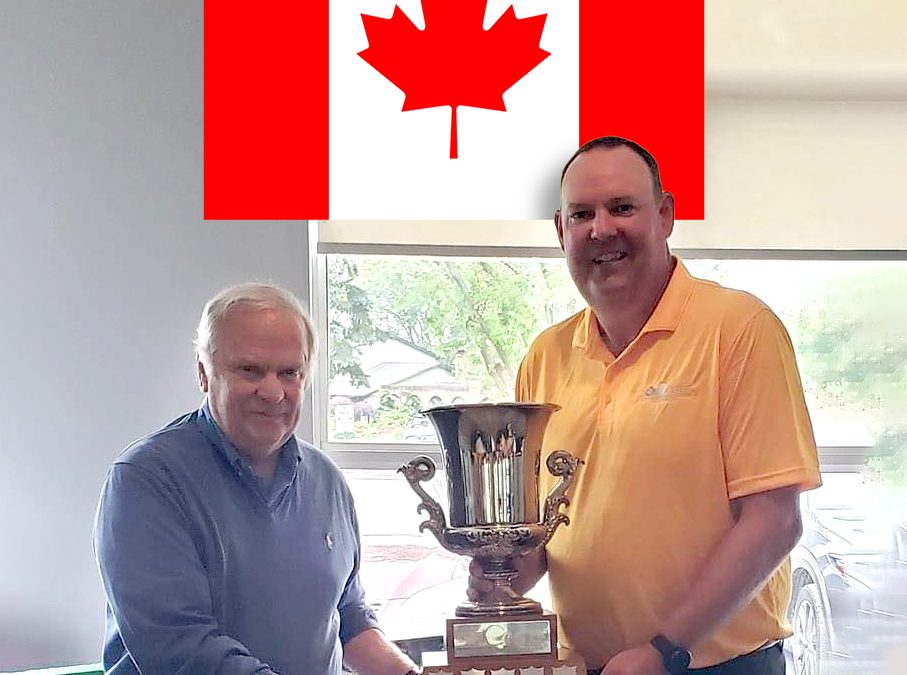
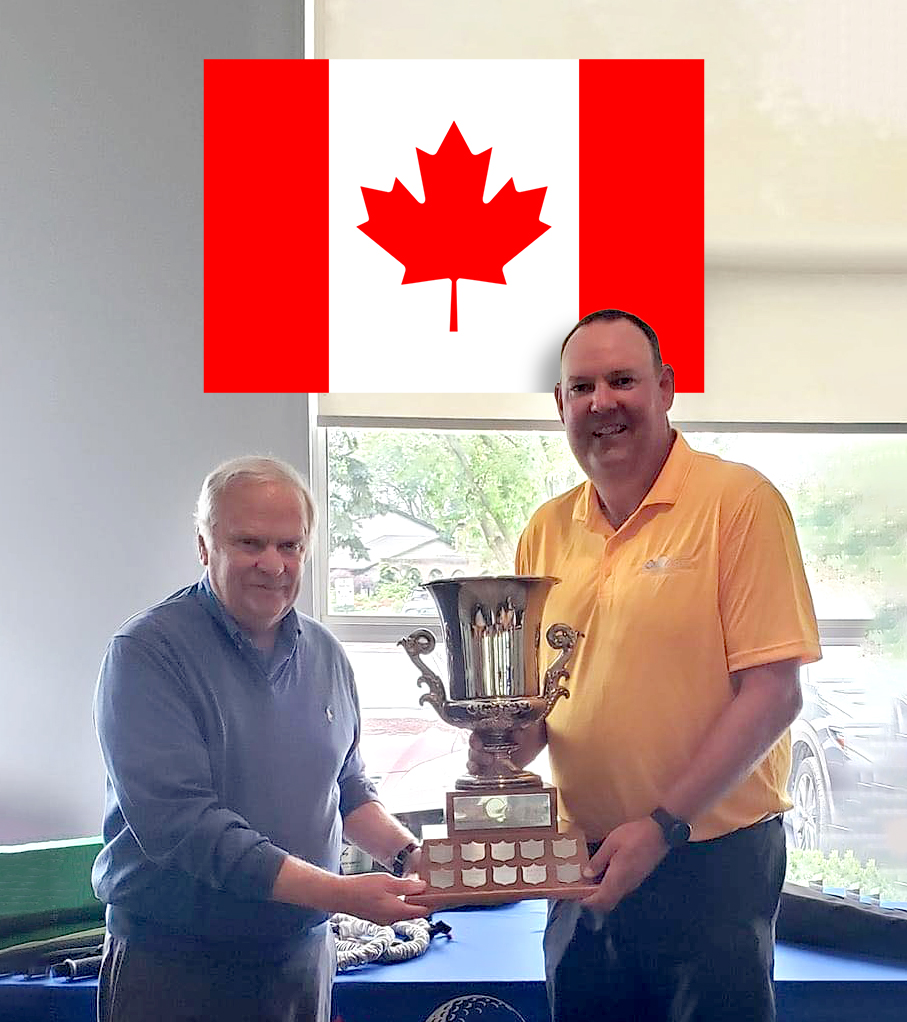
In the end, there were almost 30 CGTF members competing. This year, more golfers were able to break the 80 mark than last year. Our president, Marc Ray, had the tournament round of his life, shooting a 71 despite a triple bogey on the narrow par-5 17th. Peter Jaklic was runner-up, carding a 76, and new member J.P. Van Rooyen rounded out the top three by overcoming some early nerves to shoot an impressive 77. Mel Hennigar, Alex Chan and Urb Van Bendegem came in at 78. A friendly putting and chipping competition was awaiting all members upon the completion of their rounds. Our CGTF educational lead, Jeff Howe, continued to provide us with teaching tools, training aids and discussion points to help us all learn from one another’s experiences. This sharing of knowledge simply added to the sentiment of camaraderie.   As the afternoon progressed, all of us were honored by a visit from our former president and founder, Bob Bryant. Bob eloquently shared his thoughts about our growing organization and reaffirmed that our present leadership, under Marc Ray, is one of the pivotal reasons to our great success. As a token of appreciation, the CGTF Cup has now been renamed the Bob Bryant Trophy to recognize the growth of the organization over the formative years under Bob’s tenure.

USGTF REGION TOURNAMENT UPDATE

Central – The USGTF Central Region Championship will be played Sunday and Monday, September 24-25, at Walden Ponds Golf Course in Hamilton, Ohio, a suburb of Cincinnati.  The entry fee of $250 includes two tournament rounds, range balls, and prize money which includes not only tournament finishes but any side games.  To enter and for more information, please call region director Tony McMullin at (513) 479-6895.

“PRO” FILES – TOURING PROFESSIONAL VIKTOR HOVLAND

He came onto the PGA Tour in 2019 with two other heralded collegiate stars, Matthew Wolfe and Collin Morikawa.  Most pundits said Morikawa had the highest ceiling followed by Wolfe, with Hovland third.  Wolfe was the first to win on Tour, and Morikawa lived up to his billing by winning two majors relatively quickly.

Hovland?  It took him a while, but he has now reached the pinnacle of achievement for the season-long FedEx Cup competition by winning the Tour Championship at East Lake in Atlanta, Georgia.  It caps off an amazing two-week run for Hovland, who also won the previous week’s BMW Championship.  He took home the richest prize in golf, $18 million, and has set himself up to be one of Europe’s stars in the upcoming Ryder Cup in Italy.

“PRO” FILE – USGTF MEMBER JAMES O’NEIL

By Jim O’Neil

My golf story is a long one; I’ll give everyone a break with some highlights. At 10 years old, I had my first golf lesson at Eagle Haven Golf Course with head pro Lefty on Little Creek Amphibious Base in Virginia. Yep, very close to Seal Team Six training quarters.

My journey in golf is actually a very humbling one, so please understand this is my story. I’m not at all bragging about my accomplishments in this wonderful game of golf. In 1980, I made the Kempsville High School golf team, mainly because of head pro Jack Harvey at NAS Oceana in Virginia Beach (Aeropines Golf Course). My father would buy me two lessons a year, and then both my father and Jack told me to practice. I practiced so much I ended up on a college NAIA golf team and won player of the year twice.

In 1986, I took my first PGA apprenticeship job under the then-active president of The Middle Atlantic PGA section, Don Saylor, at River Bend Country Club in Great Falls, Virginia. In 1990, I moved home to Virginia Beach and took a job under, again, an active president of the MAPGA, Gene Mattare.

After three years of soul-searching, wondering if I was a player or a businessman in the PGA, I decided to get away from the game completely and focus on my new love. Mrs. Mia O’Neil entered my life, and we started our family under the wonderful global company Stihl Incorporated in Virginia Beach. Team Stihl allowed us to raise our three children Lashar, Brenden and Tameria for 28 years.

Currently, the United States Golf Teachers Federation has given me a rebirth in golf. I’m currently a Stihl retiree who plays in our company golf league on Thursdays. Now – praise God – I’m the full-time golf instructor at NAS Oceana and I’m in training to win again on what I call the teachers tour.