
Teaching “PRO” File – John Brough

Teaching “PRO” File – John Brough

John Brough is a USGTF Master Golf Teaching Professional and Class A PGA member residing in Bigsonia, Pennsylvania. He joined the USGTF in 2009 and completed his Master’s certification in September 2013. Currently Brough is the assistant golf professional at Treesdale Golf and Country Club, located north of Pittsburgh.

Each summer, Brough runs weekly clinics, monthly junior programs, weekly summer camps, and coaches three PGA Junior League teams. Having two 13U teams and one 17U team, which won the highest level of competition last summer. Brough is the lead instructor for the North Hills Golf Academy, where he instructs players of all levels throughout the year. Currently teaching over 200 junior golfers over the course of the year.

In addition to golf instruction and completing day-to-day golf operations at Treesdale. Brough is also heavily involved in golf fitness. Holding all three levels of SuperSpeed training, and several Titleist Performance Institute certifications which include Golf 2, Fitness 2, Power 2 and Junior Golf 2. Brough teaches a variety of individuals in fitness and speed training as well as a lot of golf-related fitness classes in the off-season at Treesdale.


U.S. Open Champions Crowned

U.S. Open Champions Crowned

June was a month of open championships for the United States Golf Association as both a men’s and women’s champion were crowned. On the ladies’ side, Australia’s Minjee Lee won in record fashion at Pine Needles Lodge and Golf Club in North Carolina, shooting a four-round total of 271 to beat the old scoring record by a stroke. Lee was a previous USGA champion as she also won the U.S. Girls Junior championship in 2012. The U.S. Women’s Open title was her second major championship in her professional career.

On the men’s side, Matt Fitzpatrick from England played a Ben Hogan-esque final round, hitting 17 greens in regulation and wound up defeating runners-up Will Zalatoris and Scottie Scheffler by a stroke. Great things had been predicted for Fitzpatrick, as he has won seven times internationally and, like Minjee Lee, was a former USGA champion, having captured the 2013 U.S. Amateur at the same course as this year’s U.S. Open, The Country Club in Brookline, Massachusetts. Fitzpatrick’s win capped off a run of fine form in 2022.

Region Update: Northeast Winner Crowned, Central Southwest Championships Up Next

Region Update: Northeast Winner Crowned, Central Southwest Championships Up Next

Northeast: Steve Pezzino captured the USGTF Northeast Region Championship played June 16 at Mountain View Golf Club in Ewing, New Jersey. Pezzino fired a score of 80 to best runner-up Muhammad Aqeel by three shots. Winners of the various age groups were: 49-and-under, Walter Fung; 50-59, Aqeel; 60-69 Pezzino; 70+, Pete Palmisano, and Ladies, Sharon Barley.

Central: The 2022 Central Region Championship will be held at the City of Mason Golf Center in Mason, Ohio, July 31- August 1. This course hosted the PGA Tour Champions Kroger Classic for almost 20 years; a fair and challenging course from all tees. The champion will have to play two solid rounds to be crowned here! The entry fee of $220 includes 18 holes and cart each day, range balls, skins game and prize fund. Tee times will start at 12:10 p.m. each day. The course is approximately 20 minutes north of Cincinnati, and 40 minutes north of the Greater Cincinnati Airport. It is a straight drive up I-71 with plenty of hotels and food in the area. For more information or to register, contact Central Region director Tony McMullin at tmcmullin72@yahoo.com.

Southwest: Festivities for the 2022 Southwest Region Championship will be held Friday-Sunday, September 9-11, at Twin Creeks Golf Club in Allen, Texas. There will be a welcome dinner the Friday evening, with two rounds of tournament play commencing Saturday. The entry fee is $225 and includes range balls. For more information and to enter, contact region director Bruce Sims at bsims@pga.com.

News From Japan

News From Japan

,

By Hajime Morita, Director, USGTF-Japan

Though the global spread of the coronavirus continues, the number of infections in Japan is decreasing, with about 60 percent of the population receiving three doses of the effective vaccine. We are gradually returning to normal pre-COVID life. The Japanese government reopened borders to foreign tourists on package tours on June 10. The requirement to wear a face mask outside will be eased soon.

As outdoor recreation is recognized to reduce the risk of infection, more and more people got interested in outdoor sports they can enjoy with friends. Golf is a sport played in a large outdoor space and has a lower risk of infection. That is why many players have come back to the golf courses. Most golf courses in Japan are now crowded with a lot of enthusiastic golfers. By taking every possible measure to prevent infections, USGTF-Japan is continuing the same activities we used to do before the pandemic. Along with the growing popularity of golf, the demand for golf teaching professionals is increasing. Our members are now needed more than ever among golfers who want to improve their golf, because they have learned the USGTF`s teachers learned proper methodology and they dedicate their passion for teaching golf to their students.

How CasinosNeteller Explains Neteller’s Role in New Zealand Online Gambling

New Zealand’s online gambling landscape has undergone considerable transformation over the past two decades, shaped by evolving legislation, shifting consumer habits, and the growing influence of international payment infrastructure. Among the various financial tools that have become embedded in how New Zealanders interact with offshore gambling platforms, Neteller stands out as one of the most consistently used e-wallet services. Understanding how Neteller functions within this specific market context requires looking beyond the basic mechanics of digital payments and examining the regulatory environment, the practical barriers players face, and the role that information resources play in helping users navigate their options. The intersection of payment technology and gambling regulation in New Zealand is more complex than it might initially appear, and a closer look reveals why Neteller has maintained its relevance even as the broader fintech landscape has expanded dramatically.

The Regulatory Framework Governing Online Gambling Payments in New Zealand

New Zealand’s approach to online gambling is governed primarily by the Gambling Act 2003, a piece of legislation that was drafted before online gambling had reached anything close to its current scale. The Act created a framework that effectively prohibits domestic operators from offering interactive gambling services to New Zealand residents, but it does not criminalize the act of placing bets with offshore operators. This creates a legal grey zone that has persisted for over twenty years, during which time millions of New Zealanders have continued to use offshore-licensed casinos, poker rooms, and sports betting platforms without facing any legal consequences as individual consumers.

The Department of Internal Affairs, which oversees gambling regulation in the country, has periodically signaled interest in revisiting this framework, particularly as digital payment flows have become easier to monitor and as problem gambling statistics have attracted greater public attention. However, as of 2024, no comprehensive legislative overhaul has been enacted, meaning the practical situation for players remains largely unchanged from what it was a decade ago. Offshore operators licensed in jurisdictions such as Malta, Gibraltar, the Isle of Man, or Curaçao continue to accept New Zealand players, and those players continue to require reliable methods for depositing and withdrawing funds.

This is where payment processors like Neteller become critically important. Because New Zealand’s major banks have historically applied varying degrees of scrutiny to transactions identified as gambling-related, players have often sought alternative routes for moving money. Neteller, operated by Paysafe Group, functions as an intermediary layer that accepts funds from a bank account or card and holds them in a digital wallet, which can then be used at participating gambling sites. The transaction that reaches the casino is categorized as a Neteller transfer rather than a direct gambling payment, which has historically reduced the frequency of bank-level transaction blocks. This practical utility, rather than any particular feature advantage, explains much of Neteller’s adoption among New Zealand gamblers.

How CasinosNeteller and Similar Resources Document the Payment Ecosystem

The growth of specialized information resources focused on Neteller’s role in online gambling reflects genuine demand from users who need detailed, jurisdiction-specific guidance. General financial advice rarely addresses the nuances of using an e-wallet at an offshore casino operating under a Maltese Gaming Authority license while the player is located in Auckland. The gap between generic payment processor documentation and the practical needs of gamblers has been filled by niche websites that track which platforms accept Neteller, what fees apply, how withdrawal times compare across operators, and how currency conversion affects the final amount received.

CasinosNeteller is one such resource that has developed a body of content specifically oriented toward this intersection of payment methods and gambling platforms. The site documents how Neteller deposits and withdrawals function across different operator categories, what verification requirements players typically encounter, and how the VIP program Neteller operates affects transaction costs for frequent users. Resources like https://casinos-neteller.com/ serve a practical function in an environment where the official regulatory bodies provide limited guidance to players who are technically operating in a legal grey area and therefore cannot easily turn to government sources for advice on managing their finances.

The value of these resources extends beyond simple casino listings. Neteller’s fee structure, for instance, is not straightforward. The platform charges fees for currency conversion that can range from 3.99% on standard accounts, though this figure has shifted over time and varies based on account tier. For New Zealand players, who are transacting in NZD but often dealing with casinos that operate in EUR or GBP, understanding the real cost of using Neteller requires knowing the current conversion rate, the applicable fee tier, and whether the receiving casino applies any additional processing charges on its end. Aggregating this information and keeping it current is precisely the kind of service that niche information platforms provide.

There is also the question of Neteller’s availability. The platform has, at various points, restricted access for users in certain jurisdictions, and while New Zealand has not faced the same level of restriction that users in the United States encountered following the Unlawful Internet Gambling Enforcement Act of 2006, the situation is not static. Players benefit from resources that monitor these changes and provide timely updates when Neteller’s terms of service or geographic availability policies shift.

Practical Mechanics of Using Neteller for New Zealand Online Casino Transactions

Opening a Neteller account requires identity verification consistent with anti-money laundering standards, including submission of government-issued identification and proof of address. This process, known as KYC or Know Your Customer verification, is mandatory under the regulatory requirements that Paysafe Group must comply with across its operating jurisdictions. For New Zealand users, this typically involves submitting a passport or driver’s license alongside a recent utility bill or bank statement. The verification timeline has historically ranged from a few hours to several business days depending on document clarity and current processing volumes.

Once verified, users can fund their Neteller account through several methods. Bank transfers from New Zealand bank accounts are accepted, as are major credit and debit cards, though some card issuers have implemented their own restrictions on transactions to payment processors associated with gambling. The practical result is that some players find certain funding methods unavailable and must use alternatives such as bank transfers, which carry no additional Neteller fee but take longer to process. Understanding this before attempting a deposit at a casino with a time-sensitive promotion is exactly the kind of operational knowledge that distinguishes informed users from those who encounter frustrating delays.

Withdrawals from Neteller back to a New Zealand bank account are subject to their own fee structure. As of recent years, Neteller has charged a fixed fee for bank withdrawals that varies by currency and destination country. For NZD withdrawals to New Zealand banks, the fee structure has historically been more favorable than for some other currencies, but players should verify current rates directly with Neteller as these figures are updated periodically. The withdrawal processing time typically ranges from one to five business days once the casino has approved the cashout request, which itself can take anywhere from a few hours to several days depending on the operator’s internal procedures.

The VIP program that Neteller operates, known as the Neteller VIP program, offers reduced fees and enhanced exchange rates for users who meet certain transaction volume thresholds. The program has several tiers, and high-volume gamblers who use Neteller consistently across multiple platforms can accumulate sufficient transaction volume to access meaningful fee reductions. For casual players, the standard fee structure applies, but for those who use Neteller as their primary gambling payment method, understanding the VIP tier requirements and how to qualify represents a genuine financial consideration. The difference between standard and VIP-tier currency conversion fees can amount to several hundred dollars annually for active players.

Neteller’s Position Within the Broader New Zealand Digital Payment Landscape

Neteller does not operate in isolation. The e-wallet market accessible to New Zealand gamblers includes competitors such as Skrill, also operated by Paysafe Group, as well as PayPal, which has historically been more restrictive about gambling-related use, and a range of cryptocurrency options that have gained significant traction since approximately 2017. Each of these options carries different fee structures, acceptance rates across gambling platforms, and regulatory exposure. Neteller’s relative advantage lies in its long-standing relationships with offshore gambling operators and its established presence in the market, which means that a larger proportion of reputable offshore casinos accept it compared to newer payment alternatives.

The cryptocurrency question is worth addressing directly. Bitcoin, Ethereum, and various stablecoins have been adopted by a growing number of offshore casinos as deposit and withdrawal options, and some New Zealand players have shifted toward these methods specifically to avoid the fee structures and occasional transaction blocks associated with fiat e-wallets. However, cryptocurrency introduces its own complications, including price volatility for non-stablecoin assets, the technical knowledge required to manage wallets and private keys, and the tax treatment of cryptocurrency transactions under New Zealand’s Inland Revenue Department guidelines. For players who are not already comfortable with cryptocurrency infrastructure, Neteller represents a more accessible and familiar option.

The regulatory trajectory in New Zealand also deserves consideration. There have been ongoing discussions within government circles about introducing a licensing framework for offshore operators wishing to legally serve New Zealand residents, similar to what Denmark implemented in 2012 or what the United Kingdom has maintained through the Gambling Commission since 2005. If such a framework were introduced, it would likely come with requirements for licensed operators to accept specific payment methods and potentially to restrict others, which could affect Neteller’s position in the market. Players and information resources alike need to monitor these legislative developments, as a shift from the current grey-area model to a formal licensing regime would have significant practical implications for how gambling payments are processed and what options remain available.

The relationship between Paysafe Group’s business strategy and the New Zealand market also warrants attention. Paysafe has, at various points, made decisions to exit or restrict service in certain gambling-adjacent markets based on regulatory pressure or risk assessments. While New Zealand has not been a market where Paysafe has signaled any intention to withdraw, the company’s broader strategic decisions affect the services available to New Zealand users. For instance, changes to Paysafe’s merchant agreements with gambling operators can affect whether a specific casino continues to accept Neteller, even if the player’s own Neteller account remains fully functional. This kind of supply-side change is something that monitoring resources track and document.

Taken together, the picture that emerges is of a payment ecosystem that is functional but not frictionless for New Zealand online gamblers. Neteller occupies a well-established position within that ecosystem, supported by its long operational history, its acceptance across a wide range of offshore platforms, and the availability of informational resources that help users understand how to use it effectively. The regulatory environment remains in a state of managed ambiguity, which creates ongoing demand for practical guidance that goes beyond what official sources provide. Whether through direct experience or through resources that aggregate and analyze the relevant information, New Zealand players who use Neteller benefit from understanding the full context of what they are working with rather than treating the payment process as a black box.

The evolution of online gambling payment infrastructure in New Zealand reflects broader trends in digital finance, regulatory adaptation, and consumer behavior that are playing out across many jurisdictions simultaneously. Neteller’s continued relevance in this specific market is not accidental but reflects a combination of established trust, operational reliability, and the practical advantages it offers in a regulatory environment that has not yet resolved its fundamental ambiguities. For players, operators, and observers of the New Zealand gambling market, understanding how payment tools like Neteller function within this context provides a clearer picture of how the market actually operates on a day-to-day basis, as distinct from how it is described in legislation that predates the current digital reality.

WGTF Top 50 Nominations Still Due

WGTF Top 50 Nominations Still Due

Nominations for the WGTF Top 50 Teachers and the 2022 Harvey Penick Trophy for Excellence in Golf Teaching are now being accepted. All teachers who wish to be considered must submit their nominations. In addition, after a pandemic-induced two-year absence, the Harvey Penick Trophy will be awarded in 2022. The award is based on teaching accomplishments, service to the golf community and to the game in general.

All USGTF Certified Golf Teaching Professionals and Master Golf Teaching Professionals, are eligible to be nominated for both honors, with the exception that former winners of the Harvey Penick Trophy are ineligible for that award. Nominations (including self-nominations) may be made through email at info@usgtf.com or through regular mail to the USGTF National Office at 200 S. Indian River Drive, #206, Fort Pierce, FL 34950. The deadline for nominations is Friday, September 9, 2022 at 5:00 p.m. EDT.

U.S. Cup Host Hotel Named; Pro-Am Format For Tournament Retained

U.S. Cup Host Hotel Named; Pro-Am Format For Tournament Retained

Hyatt Place Plantation has been named the host hotel for the 26th annual United States Golf Teachers Cup to be held Monday and Tuesday, October 24-25, at Plantation Preserve Golf Club in Plantation, Florida, just west of Fort Lauderdale. Guest rates of $139 are available for king or double rooms from October 22 through October 26.  Rooms include daily hot buffet breakfast, Wi-Fi, free parking, and is only seven minutes from Plantation Preserve Golf Club. You may call Hyatt Reservations at (888) 492-8847 and request Rate Code: G-USG1, or to book online visit  Click Here.

The U.S. Cup itself will utilize a pro-am format, as in the past. Each USGTF participant is invited to bring an amateur partner to play in the concurrent pro-am, although this is not a requirement to play in the Cup itself. Play will be in four divisions, Open, Senior (ages 50-67), Super Senior (68+), and Ladies. The entry fee is $525 for all participants and includes two rounds of tournament play, range balls prior to play, prize money, and a closing luncheon and awards ceremony.

To register, please go to www.USGTF.com/USCup or call the USGTF National Office at (772)88-USGTF.
www.USGTF.com/USCup
Editorial – What Percent of Technology Should Be Incorporated Into Your Lesson?

Editorial – What Percent of Technology Should Be Incorporated Into Your Lesson?

By: USGTF Technical Committee

Launch monitors seem to be everywhere, from PGA Tour driving ranges to lesson tees. Video has also been a mainstay of instruction for almost four decades, and combined with launch monitors, it seems almost no stone is unturned in diagnosing a student’s problem.

Yet, there are still old-school teachers who do not use any technology at all, instead relying on their eyes and experience to guide their instruction. And that brings us to the question, how much technology should be incorporated into the modern lesson? The obvious answer is as much as necessary in order to see and measure progress. The benefits of a launch monitor such as the GC Quad or TrackMan enable the teacher to tangibly measure any progress. For example, if a student started out with a swing path that is 10° degrees outside-in, progress (or lack thereof) can be accurately measured with a launch monitor. This has a two-fold benefit: The teacher can see if their instruction is working, and the student can glean confidence that they are making progress.

Video systems are far easier to use nowadays, as iPads are frequently used by many teachers, along with video setups such as the V1. Video can literally be taken easily for every swing during a lesson, but this is obviously not necessary. But enough video should be taken so that, like the launch monitor data, progress can be measured, this time visually. There are also pressure mats that measure how much weight a golfer is putting on each foot throughout various points in the swing, and the K-Vest which measures and analyzes a student’s swing movements and positions. Teachers who are not using modern technology risk being left behind by their more tech-savvy colleagues. Going forward into the 21st century, technology on the lesson tee will only become more ubiquitous.

OnCore Golf

OnCore Golf

OnCore Golf, an industry partner of the USGTF, sponsors Tour professional Erik Compton, who called OnCore’s Vero X1 ball the best he’s ever played. As OnCore’s webiste said, OnCore golf balls are “engineered to outperform them all.”

In addition to the Vero X1, there is the Elixr, Elixr 2022, and the Avant 55. There is an OnCore golf ball for every player. For more information on OnCore, please visit www.OnCoreGolf.com.

For USGTF member pricing, please contact USGTF Membership Services at member_services@usgtf.com.

Come Riconoscere la Dipendenza dal Gioco: la Guida di Fortunareale

La dipendenza dal gioco d’azzardo è un disturbo riconosciuto dalla comunità scientifica internazionale e classificato nel Manuale Diagnostico e Statistico dei Disturbi Mentali (DSM-5) come “Disturbo da Gioco d’Azzardo”, una categoria introdotta nella quinta edizione del manuale nel 2013, sostituendo la precedente denominazione di “gioco d’azzardo patologico”. Questa distinzione non è puramente terminologica: riflette una comprensione più approfondita del fenomeno, che oggi viene collocato nella stessa categoria dei disturbi da uso di sostanze, riconoscendo i meccanismi neurobiologici comuni che coinvolgono il sistema dopaminergico. In Italia, il fenomeno assume dimensioni preoccupanti: secondo i dati dell’Istituto Superiore di Sanità, si stima che tra l’1,3% e il 3,8% della popolazione adulta presenti comportamenti problematici legati al gioco, con una prevalenza più alta tra gli uomini e nelle fasce d’età comprese tra i 18 e i 34 anni. Riconoscere i segnali precoci di questa dipendenza è il primo passo fondamentale per intervenire in modo efficace, sia per chi gioca sia per chi gli sta vicino.

I Meccanismi Psicologici alla Base della Dipendenza dal Gioco

Per comprendere come si sviluppa la dipendenza dal gioco d’azzardo, è necessario partire dai meccanismi cerebrali che essa attiva. Il gioco d’azzardo stimola il rilascio di dopamina nel nucleo accumbens, la stessa area cerebrale coinvolta nella dipendenza da sostanze come cocaina e alcol. Ciò che rende il gioco particolarmente insidioso rispetto ad altre forme di dipendenza è il cosiddetto “rinforzo a rapporto variabile”: la ricompensa (la vincita) arriva in modo imprevedibile, il che, paradossalmente, rende il comportamento molto più difficile da estinguere rispetto a un rinforzo costante. Questo principio, studiato già negli anni Cinquanta dallo psicologo comportamentista B.F. Skinner attraverso i suoi esperimenti sulle macchine a leva con i piccioni, è lo stesso su cui si basano le slot machine moderne.

Un altro meccanismo centrale è quello delle “quasi-vincite”: quando i simboli di una slot machine si fermano a un passo dalla combinazione vincente, il cervello registra questa esperienza in modo simile a una vincita reale, generando un’attivazione dopaminergica che spinge a continuare a giocare. Studi di neuroimaging condotti presso l’Università di Cambridge e pubblicati nel 2009 sulla rivista Neuron hanno dimostrato che le quasi-vincite attivano le stesse aree cerebrali delle vincite effettive in soggetti con disturbo da gioco d’azzardo, mentre nei giocatori occasionali questo effetto è molto più contenuto. Questa differenza neurobiologica spiega perché alcune persone sviluppano dipendenza e altre no, anche a parità di esposizione al gioco.

Un terzo elemento psicologico rilevante è la cosiddetta “fallacia del giocatore”: la convinzione irrazionale che eventi passati influenzino quelli futuri in giochi basati sulla casualità. Se una roulette ha dato rosso dieci volte di fila, molti giocatori sono convinti che il nero “debba” uscire presto. Questa distorsione cognitiva, ampiamente documentata nella letteratura scientifica, alimenta il comportamento compulsivo e porta il giocatore a inseguire le perdite con l’obiettivo di “riprendersi” quanto perso, un pattern comportamentale che gli esperti definiscono “chasing” e che rappresenta uno dei criteri diagnostici più significativi del disturbo.

I Segnali Riconoscibili della Dipendenza: Dalla Fase Iniziale a Quella Avanzata

La dipendenza dal gioco d’azzardo non si manifesta improvvisamente: segue una progressione che Robert Custer, psichiatra americano considerato uno dei pionieri nello studio di questo disturbo negli anni Settanta e Ottanta, ha descritto attraverso tre fasi principali: la fase vincente, la fase perdente e la fase della disperazione. Comprendere questa progressione aiuta a identificare il momento in cui un comportamento di gioco ricreativo inizia a trasformarsi in qualcosa di problematico.

Nella fase iniziale, i segnali sono spesso sottili e facilmente razionalizzabili. Il giocatore comincia a pensare al gioco con maggiore frequenza, anche quando è impegnato in altre attività. Aumenta progressivamente le somme puntate per mantenere lo stesso livello di eccitazione, un fenomeno analogo alla tolleranza che si sviluppa nelle dipendenze da sostanze. Inizia a mentire, anche in modo apparentemente innocuo, sulla quantità di tempo o denaro spesa nel gioco. Può manifestare irritabilità o irrequietezza quando tenta di ridurre o smettere di giocare. Questi ultimi due elementi, la tolleranza e i sintomi da astinenza, sono criteri diagnostici espliciti nel DSM-5 e la loro presenza simultanea è un segnale d’allarme che non dovrebbe essere sottovalutato.

Nella fase intermedia, i problemi diventano più evidenti e concreti. Il giocatore inizia a trascurare obblighi lavorativi, familiari e sociali a causa del gioco. Cominciano a emergere difficoltà finanziarie: prestiti non restituiti, conti correnti prosciugati, debiti accumulati. In questa fase è comune il ricorso a strategie per procurarsi denaro da destinare al gioco: chiedere prestiti ad amici e familiari con pretesti vari, vendere oggetti di valore, in casi più gravi ricorrere a comportamenti illegali come piccoli furti o appropriazioni indebite. Secondo i dati del Dipartimento Politiche Antidroga italiano, circa il 30% dei giocatori problematici ha dichiarato di aver commesso atti illeciti per finanziare il proprio gioco.

Nella fase avanzata, il quadro clinico si complica ulteriormente. La depressione, l’ansia e i pensieri suicidari diventano significativamente più frequenti: studi epidemiologici internazionali stimano che il rischio di tentativo di suicidio nei giocatori patologici sia fino a due volte superiore rispetto alla popolazione generale. Il giocatore in questa fase spesso ha esaurito tutte le risorse economiche disponibili, ha compromesso le relazioni affettive più importanti e può trovarsi in situazioni di isolamento sociale grave. La vergogna e il senso di colpa, paradossalmente, alimentano ulteriormente il comportamento compulsivo come meccanismo di fuga emotiva.

Portali di informazione sul gioco responsabile come http://fortunareale.com hanno contribuito a diffondere strumenti pratici di autovalutazione, come il questionario SOGS (South Oaks Gambling Screen) o il PGSI (Problem Gambling Severity Index), che permettono a chiunque di valutare in modo anonimo il proprio rapporto con il gioco attraverso domande standardizzate validate dalla ricerca scientifica internazionale.

Il Contesto Normativo Italiano e il Ruolo della Prevenzione

In Italia, il quadro normativo relativo al gioco d’azzardo ha subito trasformazioni significative negli ultimi vent’anni. La liberalizzazione progressiva del settore, avviata con la legge finanziaria del 2003 che ha introdotto le videolottery (VLT), ha portato a una proliferazione dell’offerta di gioco sia fisica sia online. L’Agenzia delle Dogane e dei Monopoli (ADM), che ha assunto le competenze dell’ex AAMS, regola il settore e ha introdotto misure di gioco responsabile sempre più stringenti, tra cui i limiti di deposito, le opzioni di autoesclusione e gli obblighi di visualizzazione di messaggi informativi sui rischi del gioco eccessivo.

Un passaggio normativo particolarmente rilevante è stato il cosiddetto “Decreto Dignità” del 2018 (decreto-legge n. 87/2018), che ha introdotto il divieto totale di pubblicità del gioco d’azzardo in Italia, con alcune eccezioni per le lotterie nazionali. Questo provvedimento, tra i più restrittivi in Europa, ha avuto un impatto significativo sulla visibilità del settore, anche se il dibattito sulla sua effettiva efficacia nel ridurre i comportamenti problematici è ancora aperto tra gli esperti. Alcuni studi condotti nei mesi successivi all’entrata in vigore del decreto hanno rilevato una riduzione della percezione sociale della normalità del gioco, mentre altri hanno evidenziato uno spostamento verso canali online meno regolamentati o verso operatori stranieri non autorizzati.

Sul fronte della prevenzione e del trattamento, il Servizio Sanitario Nazionale italiano ha progressivamente integrato la dipendenza da gioco d’azzardo nei percorsi dei Servizi per le Dipendenze (SerD), grazie anche alla legge di stabilità del 2016 che ha istituito il Fondo per il contrasto del gioco d’azzardo patologico. Tuttavia, il gap tra il numero stimato di persone con disturbo da gioco e quelle che effettivamente accedono ai servizi di cura rimane molto ampio: si stima che meno del 10% dei giocatori problematici cerchi aiuto professionale, a causa dello stigma sociale, della negazione del problema e della mancanza di informazione sui servizi disponibili.

Fortunareale ha dedicato sezioni specifiche del proprio sito alla promozione del gioco responsabile, includendo informazioni sui servizi di supporto disponibili sul territorio nazionale come il Telefono Verde Dipendenze e Doping dell’ISS (numero 800 274 274), attivo gratuitamente per chi ha bisogno di informazioni o supporto legato a qualsiasi forma di dipendenza comportamentale, incluso il gioco d’azzardo patologico.

Come Aiutare una Persona con Dipendenza da Gioco: Strategie e Risorse

Riconoscere la dipendenza da gioco in una persona cara è spesso più difficile che riconoscerla in sé stessi, perché i giocatori problematici tendono a nascondere il loro comportamento con grande abilità. La menzogna sistematica non è necessariamente un tratto caratteriale negativo: è una conseguenza diretta della dipendenza e del senso di vergogna che essa genera. Capire questo aspetto è fondamentale per chi si trova nella posizione di voler aiutare un familiare o un amico in difficoltà.

Il primo approccio raccomandato dagli esperti è quello di aprire una conversazione in un momento neutro, lontano dalle conseguenze immediate di un episodio di gioco (come la scoperta di un debito o di una bugia). I toni accusatori e le discussioni cariche di emotività tendono a far chiudere il giocatore in sé stesso e a rafforzare i meccanismi di negazione. È invece più efficace esprimere preoccupazione in modo diretto ma non giudicante, usando affermazioni in prima persona del tipo “Mi preoccupo quando vedo che…” piuttosto che “Tu fai sempre…”. Questo approccio, derivato dalle tecniche di colloquio motivazionale sviluppate da William Miller e Stephen Rollnick negli anni Ottanta, è stato validato da numerosi studi clinici come strumento efficace per favorire la consapevolezza e la motivazione al cambiamento nelle dipendenze comportamentali.

Un errore comune dei familiari è quello di “proteggere” il giocatore dalle conseguenze del suo comportamento, pagando i suoi debiti o coprendo le sue menzogne. Questo comportamento, definito in psicologia “enabling” (facilitazione), può essere mosso da buone intenzioni ma nella pratica prolunga il problema rimuovendo le conseguenze naturali che potrebbero spingere il giocatore a cercare aiuto. Al contrario, stabilire confini chiari e mantenerli con coerenza è una delle strategie più efficaci per creare le condizioni in cui il cambiamento diventa possibile.

Sul piano delle risorse terapeutiche, il panorama italiano offre diverse opzioni. I SerD offrono percorsi gratuiti di valutazione e trattamento che possono includere psicoterapia individuale, terapia di gruppo e, in alcuni casi, supporto farmacologico con farmaci come il naltrexone, che ha mostrato efficacia nella riduzione dell’impulso al gioco in studi clinici randomizzati. Le comunità terapeutiche specializzate nella dipendenza da gioco, come quelle aderenti al network Cnca, offrono percorsi residenziali per i casi più gravi. I Giocatori Anonimi, il programma in dodici passi ispirato agli Alcolisti Anonimi, sono presenti in tutta Italia e offrono un supporto tra pari che molti trovano complementare al trattamento professionale. Anche i familiari possono trovare supporto nei Gam-Anon, gruppi specificamente dedicati ai familiari di giocatori problematici.

Riconoscere la dipendenza dal gioco non è mai un processo semplice, né per chi ne è affetto né per chi gli sta vicino. Richiede informazione, lucidità e la capacità di distinguere tra il comportamento problematico e la persona nella sua interezza. La ricerca scientifica degli ultimi decenni ha dimostrato in modo inequivocabile che la dipendenza da gioco è un disturbo trattabile e che il recupero è possibile, anche nei casi più gravi, a condizione che si acceda a un supporto adeguato. La consapevolezza è il punto di partenza: comprendere i meccanismi della dipendenza, riconoscerne i segnali precoci e sapere a chi rivolgersi sono passi concreti che possono fare la differenza tra una spirale sempre più profonda e l’inizio di un percorso di cambiamento reale e duraturo.

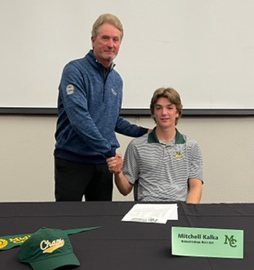
Student Spotlight – Mitchell Kalka

Student Spotlight – Mitchell Kalka

Mitchell Kalka, 18, has a bright future in golf, but equally impressive is the quality of person he is. According to his coach, USGTF professional Bruce Sims, Kalka “is just an all-around good kid. He’s a hard worker, he listens and is amenable to change.”

Kalka started working with Sims at age 9 at Sims’ junior academy. He has played all four years on the varsity at Liberty High School in Frisco, Texas, and is the top-ranked AJGA player locally. He is signed to play college golf at the #1-ranked NJCAA Division 1 junior college golf team in the nation, Midland College in Midland, Texas. His dream is to graduate from junior college and then play for Texas Tech in two years.

Kalka has also won numerous junior tournaments, and won his high school district tournament shooting 36-30 – 66, so he knows how to go low. Look for the name Mitchell Kalka on college leaderboards soon.

Teaching “PRO” File – Lawrence Sykkmon

Teaching “PRO” File – Lawrence Sykkmon

Lawrence Sykkmon is a USGTF Master Golf Teaching Professional and Titleist Performance Institute certified with over 20 years of experience, teaching both children and adults of all skill levels. He teaches at St. Marlo Country Club in Duluth, Georgia.

Sykkmon started playing golf at the age of 19, and being a physical trainer at the time, he had some clients who wanted him to help them with their golf games. It wasn’t until he was in his 30s that he started teaching more seriously, and shortly thereafter he earned his USGTF credentials to have more credibility in the industry. He considered the PGA route but did not want to focus on other duties besides golf, so he found the USGTF to be a perfect fit.

He has two YouTube channels; both of which are for golf entertainment (one is in English and the other in Chinese). His teaching philosophy is “Energy First, Impact Later” (EFIL). You can fellow EFIL Golf on Instagram and TikTok at efilgolf or @efilgolf. Sykkmon believes the game of golf is both fun and challenging and everyone can enjoy and excel at the game with proper instruction and practice methods. He also says that if everyone could shoot 80, the time to play a round of golf would be much quicker, and emphasized the teacher’s role in this.

He is also a National Federation of Professional Trainers certified fitness trainer and has over 20 years of fitness experience. His experience in fitness training, combined with golf instruction, form the foundation and fundamentals for EFIL Golf. To learn more, please visit: www.efil.life or www.efilgolf.com.